Machter Auto
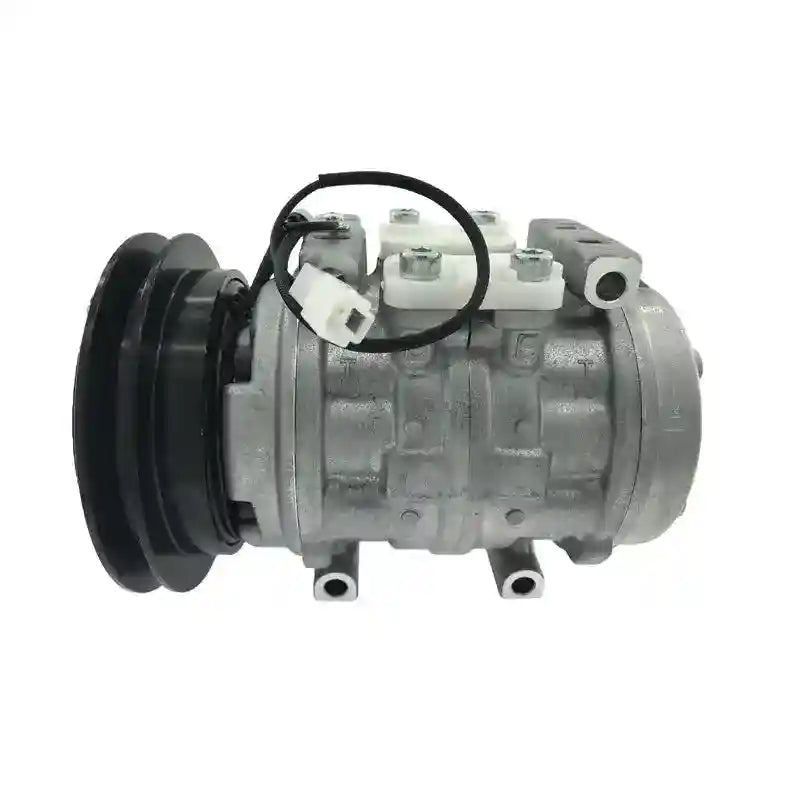
Air Con Compressor - Suitable for Landcruiser HJ61 HJ60 HJ75 2H 4L Diesel 1984-1989
Air Con Compressor - Suitable for Landcruiser HJ61 HJ60 HJ75 2H 4L Diesel 1984-1989
Couldn't load pickup availability
Built for the Bush, Backed by Experts
Built for the Bush, Backed by Experts
- Genuine Local Support: We aren't just a website; we’re 4WD enthusiasts based in Surry Hills, NSW.
- Free Australia-Wide Shipping: We ship every order across the country at no extra cost to you.
- Fitment Guarantee: We only stock gear we’ve tested on our own rigs to ensure it fits your Toyota perfectly.
- Trusted AU Business: Proudly Australian owned and operated with a verified ABN: 83 685 124 949.
Restore your Land Cruiser’s air conditioning system to OEM standards with this Air Con Compressor. Designed for Toyota Land Cruiser HJ60, HJ61, and HJ75 4.0L Diesel (2H, 1984-1989) models, this unit offers reliable performance, consistent airflow, and efficient cooling.
This compressor features a 143mm clutch diameter and an A-section pulley, ensuring smooth functionality and easy integration with your vehicle’s system. Built to withstand the toughest conditions, this heavy-duty compressor is ideal for everyday use and off-road adventures. Choose this unit for a direct-fit replacement that provides dependable performance and long-lasting durability and get your vehicle’s air conditioning system running like new.
Features
Type: AC Compressor
Clutch Diameter: 143mm With A Section Pulley
Fitment
- Fit For Toyota Land Cruiser HJ60 with 2H 4.0L 6 Cylinder Diesel Engine 08/1980-12/1989
- Fit For Toyota Land Cruiser HJ61 with 2H 4.0L 6 Cylinder Diesel Engine 08/1984-12/1989
- Fit For Toyota Land Cruiser HJ75 with 2H 4.0L 6 Cylinder Diesel Engine 08/1984-07/1990
Package
1 x AC Compressor
Frequently Asked Questions
What are the symptoms of a failing air conditioning compressor?
The most obvious symptom is your cabin vents blowing warm air even when the A/C system is turned fully on. Other critical warning signs include loud screeching, clattering, or metallic clicking noises coming from the engine bay when the air con clutch engages, a completely frozen pulley that snaps the drive belt, or visible oil and refrigerant leaks around the compressor nose seal and casing splits.
Which specific Toyota LandCruiser models and years does this compressor fit?
This replacement A/C compressor is precision-engineered for classic 4x4 LandCruiser lines built between 1984 and 1989. It is a direct bolt-on match for models powered by the 4.0-litre 6-cylinder diesel engines, including the naturally aspirated 2H and the factory turbo-diesel 12H-T power plants. It perfectly fits workhorse platforms like the HJ60, HJ61, and HJ75 variants.
Does this A/C compressor come pre-filled with oil?
Yes, replacement compressors are typically supplied with a small amount of assembly oil internally to protect the precision moving parts during storage and transport. However, proper execution dictates that your installation technician must check, drain, or balance the oil to match the exact oil type and volume specifications required by your overall mobile air conditioning loop configuration before gassing the vehicle.
Why is it highly recommended to replace the receiver drier at the same time?
When an old air conditioning compressor fails, it often sheds tiny metallic particles and debris into the system lines. Furthermore, opening up the closed A/C loop exposes the lines to atmospheric moisture. Replacing the receiver drier filter is standard trade practice because it captures this destructive debris and traps moisture, preventing your brand-new compressor from suffering immediate internal damage.
Can I install this air con compressor myself at home?
While you can physically unbolt the old unit and bolt the new compressor onto its engine block bracket, handling the refrigerant requires professional care. It is illegal to vent automotive refrigerant gases into the atmosphere. The system must be professionally recovered by a licensed automotive air conditioning specialist, who will then pull a deep vacuum to remove moisture, check for system leaks, and re-gas the loop with the correct weight of refrigerant.